
LeadScrapper Pro
Finds prospects, analyzes their digital presence, and drafts the outreach, in one pipeline.
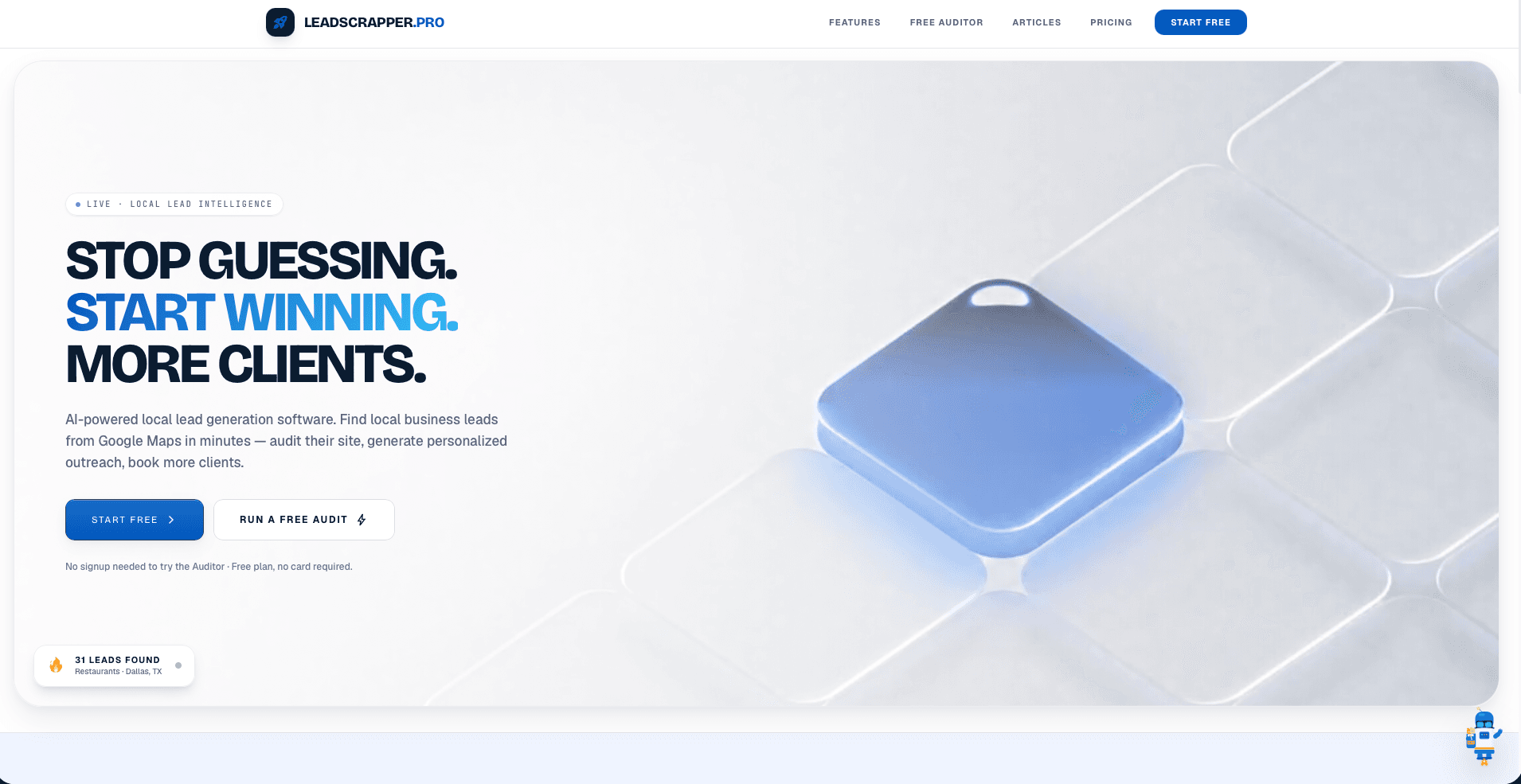
Freelancers and agencies prospecting for clients spend hours manually finding local businesses, checking their websites for problems, then writing outreach from scratch for each one. Most of that time is repetitive and none of it is billable.
One pass does discovery, a technical and marketing audit, and an outreach draft together, so the message a prospect receives references the exact problem the audit found on their own site, not a generic script.
Discovery runs against Google Maps and public business data, then each result is queued for an automated audit (speed, mobile, SSL, SEO, dead CTAs). The audit findings are attached to the lead record and passed directly into the outreach draft, so the signal scraped at the start survives, unmodified and attributable, all the way to the message a user sends.
What is LeadScrapper Pro and how is it different from a traditional lead scraper?
Traditional scrapers stop at a contact list. LeadScrapper Pro audits each business's digital presence and drafts outreach from what the audit finds, so the list arrives with a reason to reach out already attached.
How does it find freelance and agency clients specifically?
It maps a city or a niche, then filters for the signals that matter to service providers: slow sites, broken mobile checkout, missing SSL, dead calls to action.
How accurate is the lead data?
Contact data (email, phone, socials) comes from the same discovery pass as the audit, so it's tied to a business that was live and checked at the time of the search, not a stale list.
Can leads be exported to a CSV or CRM?
Yes. CSV export ships on every plan; the Business plan adds API and webhook sync to any CRM.
Is web scraping with LeadScrapper Pro legal?
It reads public business information the same way a browser does, no login walls, no private data.
Built and shipped as a working pipeline, not a prototype, in five days: discovery, audits, and AI-drafted outreach, wired end to end before the first real user touched it.